
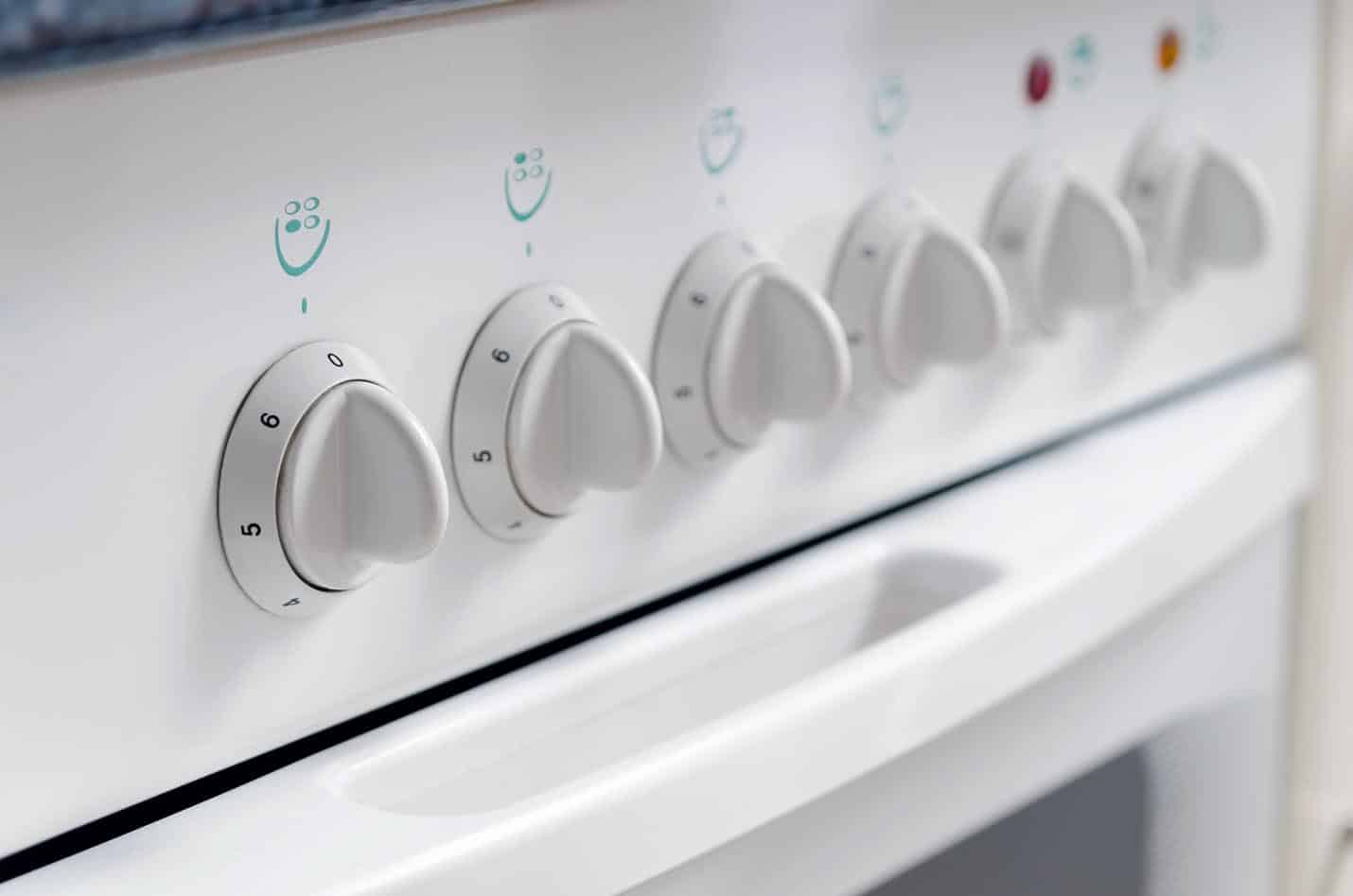
A cooker with timer has a timer that cuts power to the stove after the time set by the user has elapsed.
Using a cooker with timer requires the ability to learn how to use a new stove and its timer. In practice, this often means that, for an older person or someone with dementia, a cooker with timer turns out to be less suitable than expected.
Even if the resident learns to use the timer, a cooker with timer does not take into account how a dangerous situation develops: the timer does not react if the stove is on the highest heat setting, the user is elsewhere, and a grease fire is only seconds away from ignition.
"A stove operated by a timer is not fire-safe enough in the home of a person living with dementia."
Stove fires often ignite in under 15 minutes, so the timer on a cooker with timer is rarely much use
A particular problem is that choosing a safe time limit remains the responsibility of the older person.
To use the timer on a cooker with timer, the user must manually turn the clock switch to a suitable duration. The time is easily set too long so that the timer does not get in the way of cooking.
Yet a stove fire most often ignites in under 15 minutes, which means the timer on a cooker with timer often cannot stop the fire from igniting in time. Especially if a hob is left on at high heat. Once the fire has ignited, it no longer matters whether the stove power is switched off.
Comprehensive stove safety also requires temperature monitoring
Rapidly escalating dangerous situations can only be stopped by safety devices that monitor the stove temperature.
There is a safer alternative to a cooker with timer: a stove guard continuously monitors the stove temperature and how the stove is being used. It is recommended especially for older people and people with dementia instead of a cooker with timer.
"A stove guard is a valuable purchase, but by preventing a fire it pays for itself many times over."
Installing a stove guard is also recommended by Tukes and SPEK . Explore the Finnish-made Safera stove guard , which can make an older person's current stove safer without replacing it.
Pros and cons of a cooker with timer for older people and people with dementia
Pros of a cooker with timer
- The timer turns the stove off after a preset time, so a cooker with timer can prevent some stove fires.
- If the stove is being replaced anyway, for example because the old one is broken or during a renovation, it can be easy to choose a similar cooker with timer instead.
- A cooker with timer usually cannot be turned on without activating the timer, so the extra safety is not only dependent on memory.
Cons of a cooker with timer
- It does not react to rapidly escalating dangerous situations when the stove is left on at high heat. The timer only stops slowly developing dangerous situations and does not protect in real-life use. Most stove fires ignite in under 15 minutes.
- It requires learning a new way of using the stove: the timer must always be switched on before the stove can be used.
- Replacing the stove with a cooker with timer can be difficult if no fully equivalent model is available. A cooker with timer may also require changes to the worktop and lower cabinets if the kitchen has a separate hob, because most cookers with timer are 50-60 cm wide freestanding cookers.
- The purchase can feel expensive and unnecessary if the current stove is still in working order.
A safer alternative to a cooker with timer: Safera stove guard also stops rapidly escalating dangerous situations
Safera stove guard monitors the stove temperature throughout cooking and detects human movement, or the lack of it, around the stove.
A stove guard also stops a rapidly escalating dangerous situation by cutting off power to the stove before a stove fire ignites, regardless of what the resident does.
Safera stove guard complies with the EN 50615 stove fire prevention standard. The standard defines several tests in which a stove guard must prevent a grease fire from igniting.
A stove guard also suits a person with dementia
A stove guard also suits a person with dementia , because using it does not require learning anything new and it can be installed on an existing stove that is already familiar to the user.
If necessary, the Safera stove guard can also send an alert to a care professional's phone so that the older person's functional ability can be checked.
A stove guard is more affordable than a cooker with timer
Installing a Safera stove guard on the current stove is less expensive than replacing the stove with a new cooker with timer.
Replacing the stove with a cooker with timer can also be difficult if no fully equivalent model is available. A cooker with timer may require changes to the worktop and lower cabinets if the kitchen has a separate hob. Most cookers with timer are 50-60 cm wide freestanding cookers.
More than 300,000 people already enjoy a safer everyday life thanks to our Finnish-made Safera stove guard
We founded Safera Oy in 2007 with one goal: that not a single stove fire would ignite anywhere in the world. We still have work to do, but our stove guard already makes everyday life safer for hundreds of thousands of people around the world.
Careless stove use is the most common cause of home fires . With our smart technology, stove fires can be prevented in advance almost completely.
Come and see a stove guard in store
Safera stove guards are on display at our retailers, who can advise you on installation and use. Find your nearest retailer and come and take a closer look: