
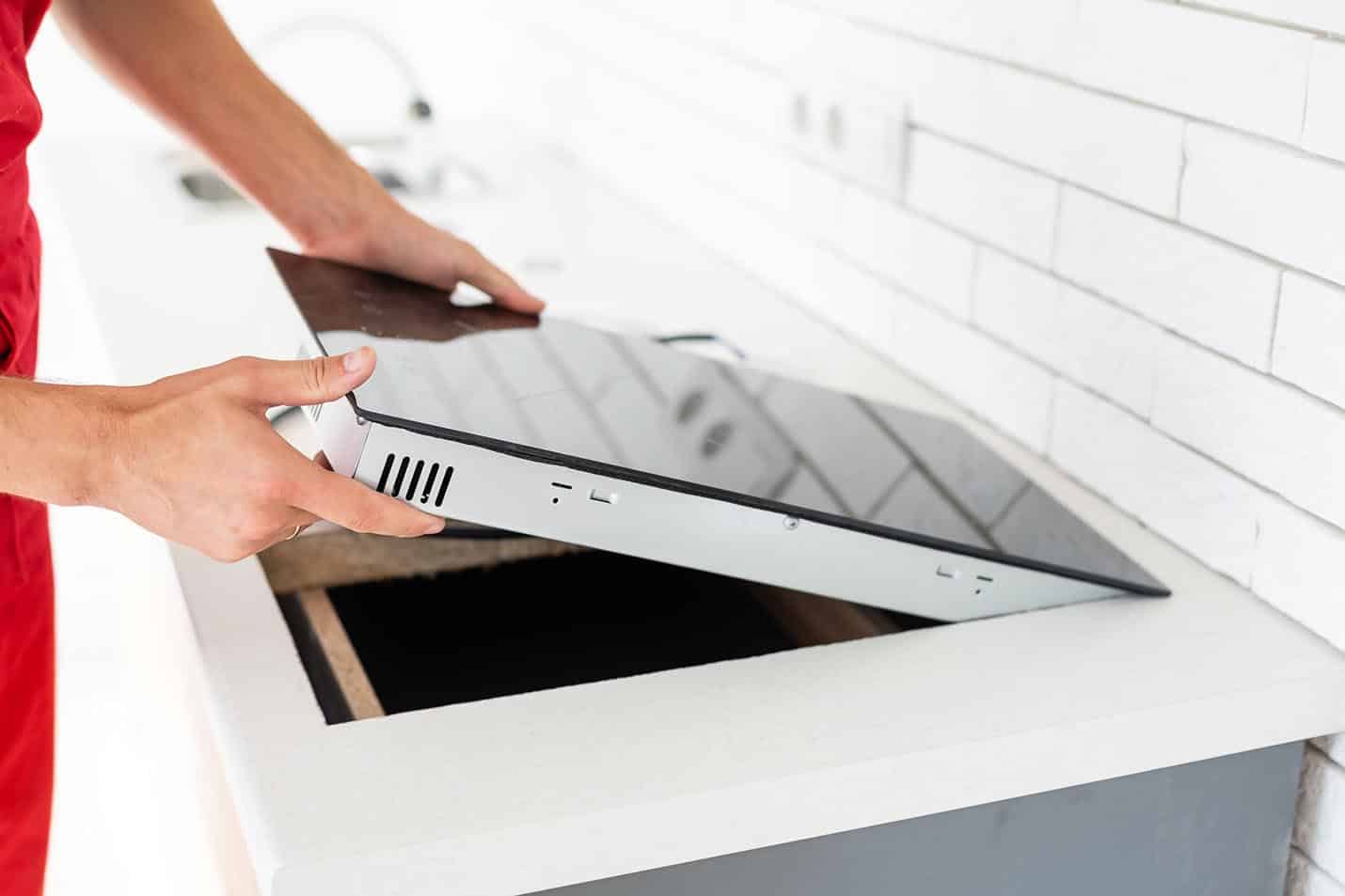
Should the resident's old stove be replaced with a new induction stove?
An induction stove represents the latest stove technology and is safer than a traditional stove in some situations. If an object that does not belong on the hob, such as a plastic container, is accidentally left there, the stove does not heat up at all because of its technology, and the plastic will not melt as it would on a traditional stove.
A pot or pan left on the stove is still just as much of a risk as on a traditional stove. It is important to remember that an induction stove is more efficient and faster than a traditional stove, including when something is forgotten.
In addition, using an induction stove with touch controls can be challenging for many people, and old pots and pans may not be compatible with an induction stove at all, which means cookware may need to be replaced.
"An induction stove or a cooker with a timer is not sufficiently fire-safe in the home of a person with dementia."
The pros and cons of an induction stove for older people and people with dementia
Advantages of an induction stove
- An induction stove will not keep heating if there is no induction-compatible cookware on the hob
- Even if the stove is left on, the hob does not heat up and will not ignite kitchen utensils that may have been left on it
Disadvantages of an induction stove
- An induction stove is much more efficient than a traditional stove, so a grease fire can ignite even faster than on an older stove
- It requires learning a new way of using the stove, which may be difficult for an older person. Touch controls and the logic of use can be hard for an older person or someone with dementia to learn
- Existing pots and pans may not be compatible with an induction stove
- Buying one may feel expensive and unnecessary if the current stove is still in working order
A Safera stove guard also stops hazardous situations that develop quickly
Safera stove guard monitors the stove temperature throughout cooking and detects human movement, or the lack of it, around the stove. It also stops a hazardous situation that develops quickly by cutting power to the stove before a stove fire starts, regardless of what the resident does.
The Safera stove guard complies with EN 50615, the standard for preventing stove fires. The standard defines several tests in which the stove guard must prevent a grease fire from igniting.
A stove guard is also suitable for a person with dementia
A stove guard is also suitable for a person with dementia because using it does not require learning anything new, and it can be installed on an existing stove that is already familiar to the user. If needed, a Safera stove guard can also send an alert to a caregiver's phone so the resident's functional status can be checked.
"A stove guard is a valuable investment, but by preventing a fire, it pays for itself many times over."
Could a stove guard be a better solution for you than an induction stove?
Ask for a quote from our resellers or contact us, and we will help you choose the Safera stove guard that suits you best: