
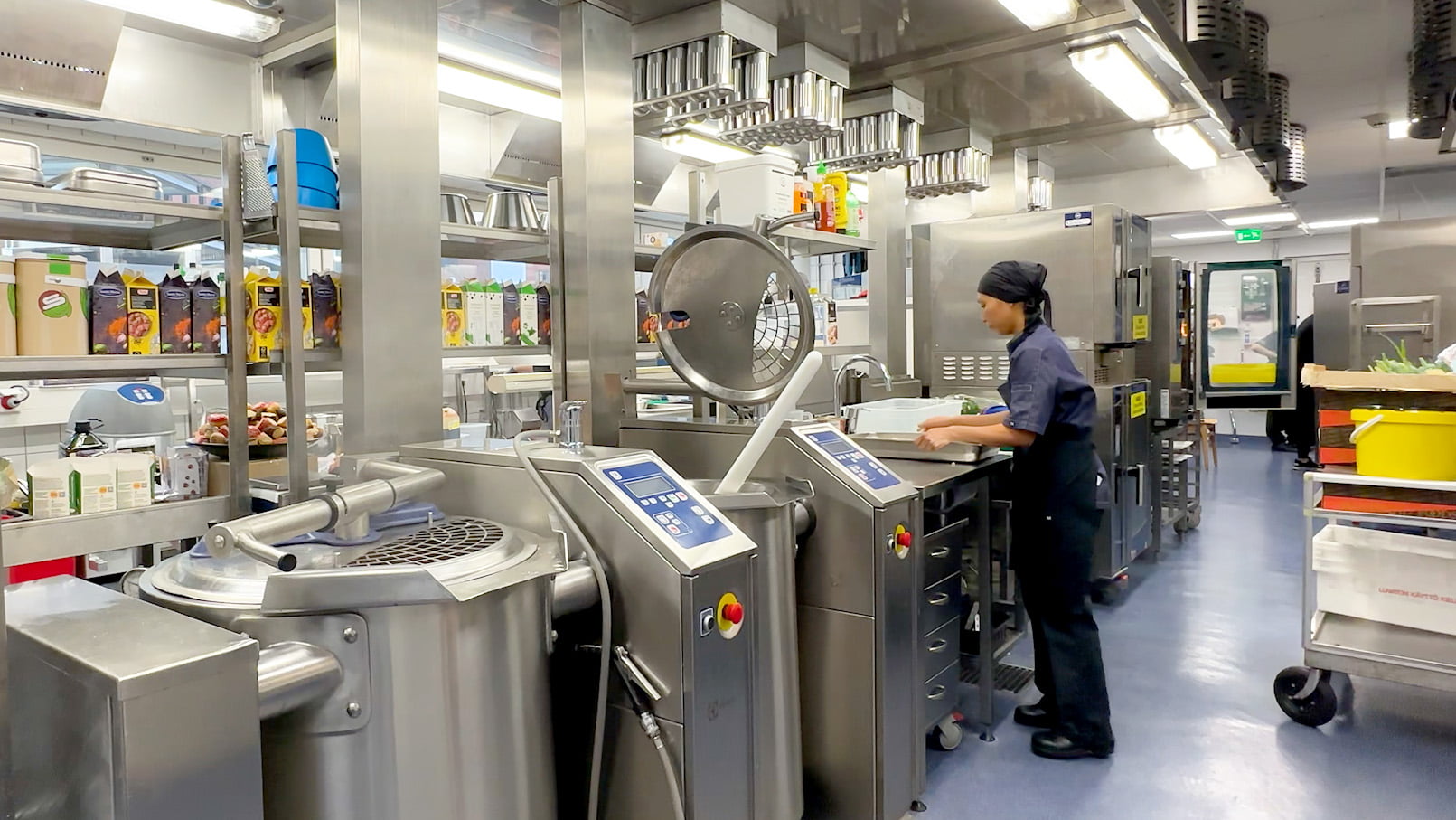
Restaurants are major energy users in Finland and have a significant impact on the energy efficiency of the building stock as a whole.
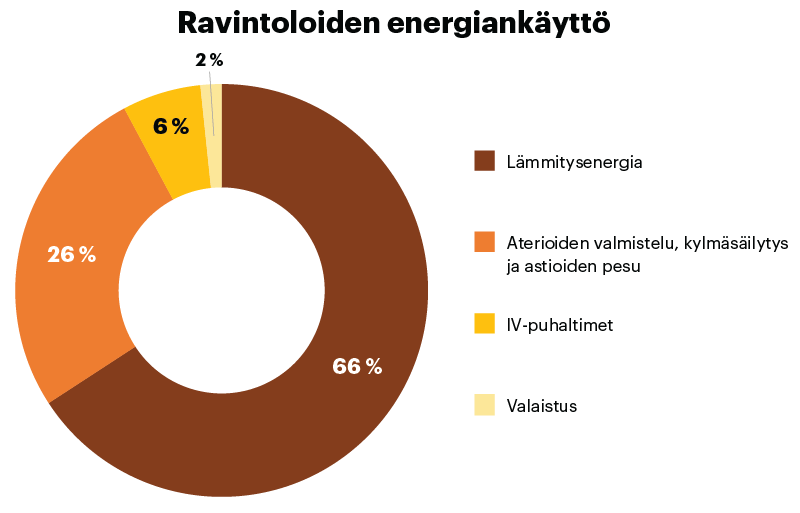
According to Motiva, restaurants in Finland consume a total of 2,431 GWh of energy. Of this, 1,600 GWh goes to heating, 641 GWh to meal preparation, cold storage and dishwashing, 150 GWh to ventilation fans, and 40 GWh to lighting.
A large share of Finland's roughly 22,000 professional kitchens operate as part of larger commercial properties, with lunch restaurants in office buildings being a typical example. Restaurants consume 5-7 times more energy per square meter than other commercial premises, so when the goal is to improve the energy efficiency of an entire property, restaurant energy use must also be included in the plan.
A large share of restaurant energy is used for ventilation
Restaurant ventilation and heating alone consume 1,750 GWh of energy per year in Finland. That equals 72% of restaurants' total energy consumption. Restaurant kitchens exhaust thousands of litres of air per second, which is many times more than in other commercial spaces.
The commonly used timer-based control of ventilation can waste tens of megawatt-hours of heating energy per year, because it is based on calculated airflow rather than what is actually happening in the kitchen. When staff are only preparing for the day before the restaurant opens, there is no need for grease hoods to exhaust heated indoor air at full power according to a timer schedule.
In other spaces, such as offices, controlling ventilation according to actual demand, for example with a CO2 sensor, is already standard practice and has delivered significant energy savings. In restaurant kitchens, timer-based control has traditionally had no real alternative.
Demand control kitchen ventilation is now available for restaurant kitchens too
We have developed an intelligent solution specifically for restaurant kitchens: Safera FlowHero demand control kitchen ventilation can be installed in place of a timer in both new and existing restaurants.
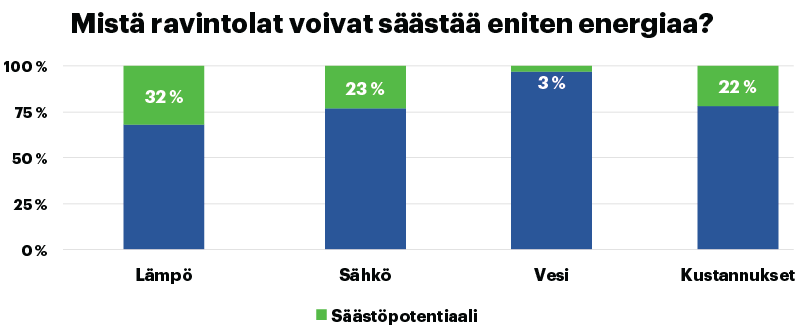
Demand control kitchen ventilation is one of the most effective and easiest ways to reduce energy consumption without changing how the restaurant operates. It is estimated that the greatest energy-saving potential in restaurants lies in heating, which is directly affected by the volume of air exhausted by ventilation:
Heating – Savings potential 32% Electricity – Savings potential 23% Water – Savings potential 3% Costs – Savings potential 22%
Controlling ventilation according to actual demand can bring substantial savings across the entire property. Read how our customer reduced energy consumption by 130 MWh and cut CO2 emissions by 17 tonnes per year by upgrading the ventilation of its lunch restaurants with demand control kitchen ventilation, with a payback period of just 1-2 years.
Contact us , and we can estimate the energy savings potential for your property.
Safera FlowHero demand control kitchen ventilation:
- Reduces the energy use, carbon footprint and energy costs of professional kitchen ventilation by up to 50% without compromising air quality or working conditions
- Available for both new and existing professional kitchens
- Installation takes only a few hours
- Savings start immediately
- Savings are easy to verify and can be included in company sustainability reporting
- Payback period can be as short as one to two years, depending on the site
- Finnish smart technology since 2007
- Read more on the Safera FlowHero product page