
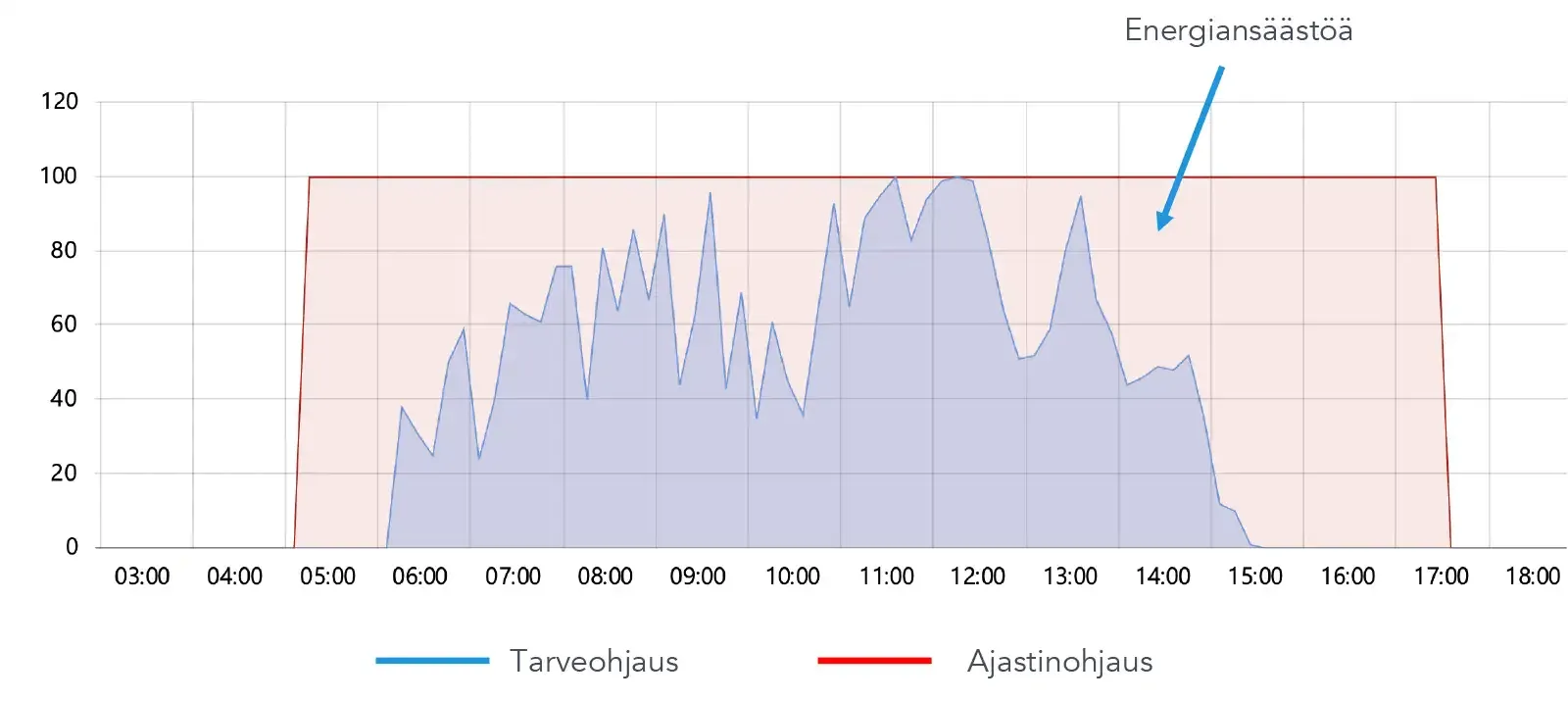
Energy savings can be verified by tracking how the fans were actually controlled and calculating the energy saved from that data. If the property’s energy monitoring is accurate enough, savings may also be directly visible in energy consumption. Realised savings can be compared with the savings estimate made before investment.
How are realised energy savings calculated?
Realised energy savings can be calculated from fan control data. Control data comes from data collected by FlowHero or from building automation trend data. The reduction in ventilation compared with the previous control method is then determined from this data.
Energy savings calculations take into account outdoor temperatures, operating hours, possible heat recovery, and reduced fan electricity use. Realised energy and cost savings can then be calculated.
Do savings show up in energy monitoring?
They can, if the share of kitchen ventilation in the property’s energy use can be monitored separately or the impact of the change on total consumption is large enough.
At Turun Teknologiakiinteistöt’s Kupittaa Pavilion, a property used for restaurant operations, the customer saw a clear drop in its energy monitoring data after FlowHero was commissioned. Based on realised air volume, annual savings were calculated at 69.5 MWh and €5,539.
Realised savings can be compared with the original estimate
The savings estimate made before investment can be compared with the realised result after operation.
At Areim’s Aallonharja savings were estimated at 130 MWh per year before the project. Realised savings in the first year of operation were 190.7 MWh—47 percent above the estimate.
At Kupittaa Pavilion the original estimate was 49.6 MWh per year. After the system was put into operation, annual savings were calculated at 69.5 MWh.
How can realised energy saving data be used?
With realised energy savings, building maintenance can report achieved savings under energy efficiency agreements and in the property’s energy and sustainability tracking.
Results can also support estimating saving potential for further sites. Both Areim and Turun Teknologiakiinteistöt have moved on to other sites after their first FlowHero projects.