
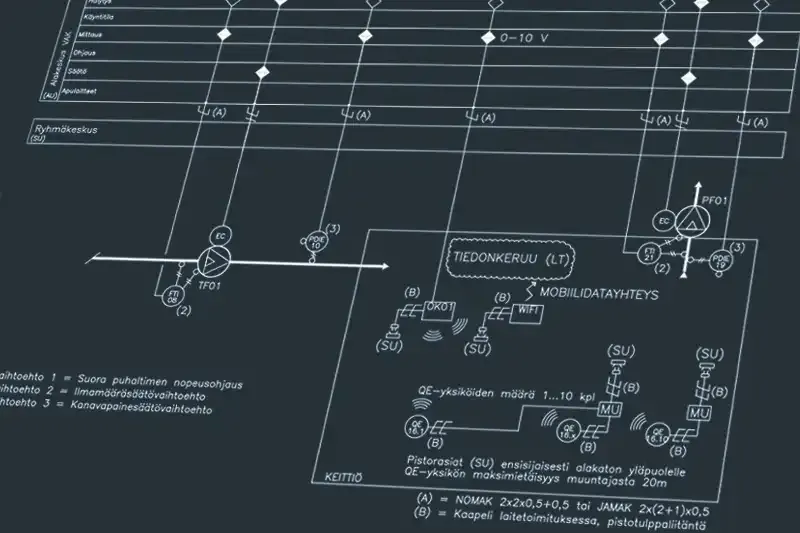
A FlowHero installation in an existing commercial kitchen usually involves changes to the controls and building automation. Design and minimum air volumes stay the same. FlowHero provides building automation with information on the current need for ventilation.
How is FlowHero connected to building automation?
FlowHero provides building automation with a 0–10 V ventilation control signal. Building automation uses the signal to control ventilation according to the functional diagram.
FlowHero does not replace building automation. Site-specific logic, any required adaptations, and supply and exhaust air coordination are implemented in building automation.
What input data is needed?
For design, identify the air handling units serving the kitchen, design and minimum air volumes, current control method and timer schedule, and building automation. Also check for possible heat recovery and supply and exhaust air coordination. You can also request a free estimate from us.
Who is responsible for what?
Safera supplies the FlowHero system and templates for the functional description and control diagram. The site’s building automation designer or building automation contractor reviews the existing ventilation implementation and prepares a site-specific functional description based on the template. The building automation contractor makes the required changes to building automation.
The detailed division of responsibilities, the scope of the electrical and building automation work, and the commissioning phases are described in the FlowHero Scope of Work.
What normally does not need to be redesigned?
FlowHero does not change the kitchen’s design or minimum air volumes. Hoods, ductwork, and the air handling unit are therefore not normally resized for FlowHero. If other shortcomings are found in the current system, they are handled as separate design issues.